
Goodness Weekly 9.14.26
"There is no such thing as ‘away.’ When we throw anything away, it must go somewhere."
—Annie Leonard
WHAT’S GOOD
Women’s Stitching Circle
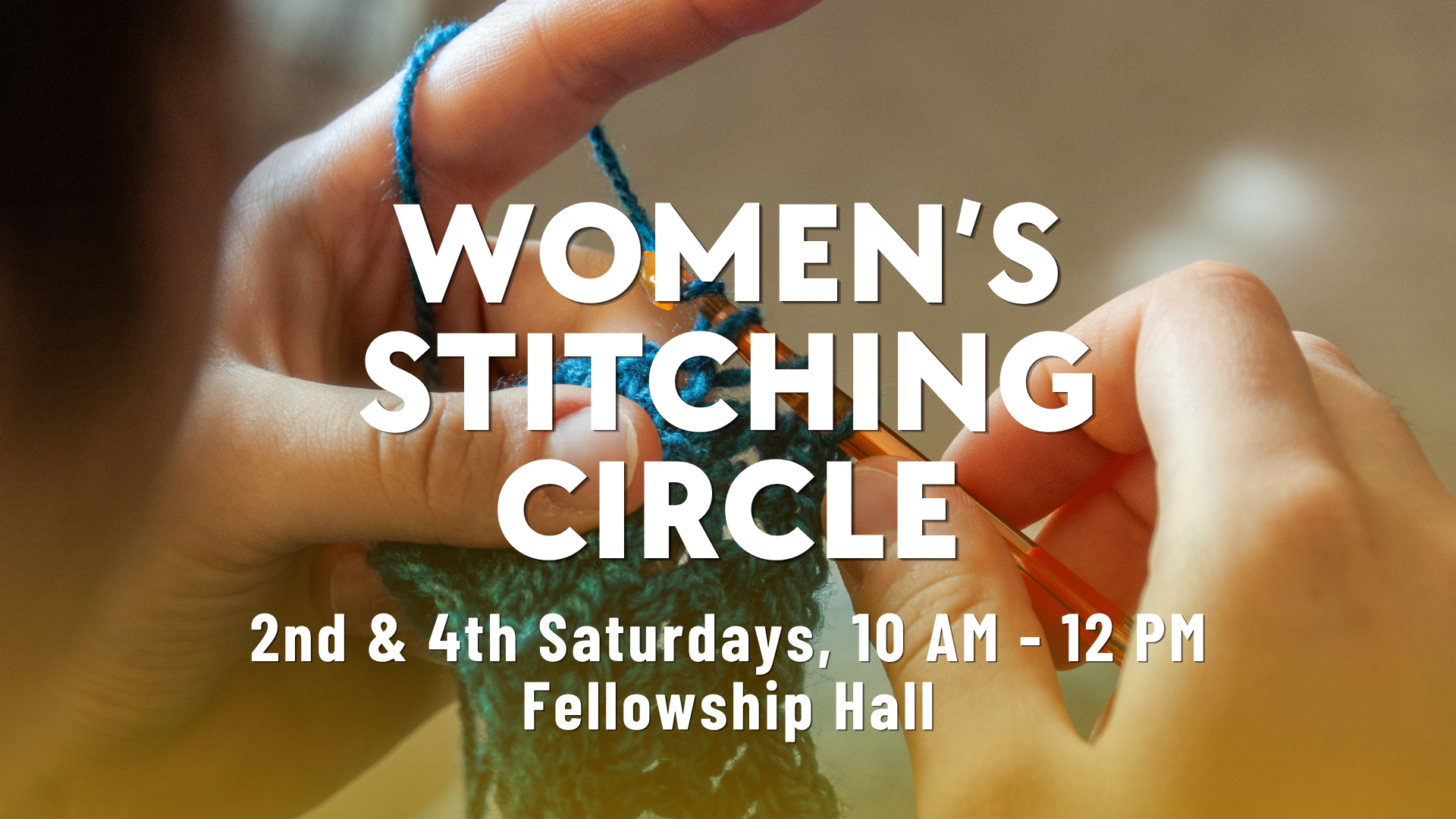
A new Women’s Stitching Circle has begun on campus and you’re invited! Join the group every second and fourth Saturday in the church Fellowship Hall from 10 AM - 12 PM. The group is open to all women who knit, crochet, sew, cross stitch, embroider, and create with any kind of needle, hook, yarn, or thread! Bring your latest project and stitch in good company.
Goodwill (Bins) Hunting
Amy Lynn Johnson, Communications Manager, Sunset Ridge Church & Collective
I think one of the most unappreciated things about our modern world is the ability to get rid of our stuff without giving it a second thought. My trash days are Thursdays and my recycling and green bin both get picked up on Mondays. My bins are all in the alley behind my house, so I don’t even have to remember which day to take them to the curb. Twice a year, I can put out brush or bulky items like furniture out on the curb for pickup, too. Granted, these services are paid for in my water bill, but it’s a nominal fee for the convenience of having someone come and magically whisk my rubbish away. And for things that aren’t quite ready for the garbage bin, but aren’t quite needed anymore, I can just load them up in the car and go drop them off at any Goodwill for them to sort through and deal with.
But what if none of these services existed? What if I had to come up with my own solution for every single food wrapper, sparkling water can, article of clothing, old toothbrush, and broken chair that ever found its way into my home? I don’t think becoming Shel Shilverstein’s Sarah Cynthia Sylvia Stout would be a viable option.
The EPA estimates that Americans produce 294.million tons of trash every year, or over 1,700 pounds per person a year. That’s about the size of an adult male polar bear. And these numbers are from 2018, nearly a decade ago. Something tells me they haven’t decreased since then. I can almost envision a giant polar bear sitting stoically in my kitchen watching me every time I decide to throw something in the trash.
I recently saw an Instagram post of a Halloween decor aisle with a text overlay that read “Someone called this ‘Landfill-Maxxing’ and now I can’t unsee it.” And now I can’t unsee it, either. Everything I see at Michaels or the Dollar Store or Old Navy or all the plastic-wrapped food at the grocery store will most likely be disposed of one day.
If I had to find my own way to dispose of 3 polar-bear-sized mounds of trash for my household every year, I would 100% find ways to reduce the amount of potential waste I was letting into my house in the first place. Right now I refuse plastic grocery bags at the store, but I could still be more diligent about single-use plastic when I’m dining out. I reduce the amount of new things I buy by getting creative by gift wrapping with recycled newspaper or reusable scarves and save my holiday decorations from year to year. I repair clothing or repurpose it as much as possible. I shop secondhand a lot to offset the demand for new production of household items and clothing—and to save money and reduce how much what other people throw out goes to the landfill. I make a lot of recycled art like sculptures and functional items including purses.
I even recently fell back in love with sifting through the bins at the Goodwill Outlet. Unlike a regular Goodwill with rows and racks of items and clothes like a retail store, the outlet is just rows of giant bins filled with a random assortment of stuff that didn’t sell in store. It’s the last stop before they get sold off for parts, shipped off to secondary global markets, or ultimately to the landfill. Everything in the bins is sold by the pound. You have to wear gloves, and you probably want to consider a face mask, too. It’s like a gold rush with dozens of people panning for secondhand treasure each time I go. My friends and I have found brand new art kits with unused paints and pastels, a like-new stovetop espresso maker, and even a Weber chimney starter for the grill.
People line up in anticipation when new bins roll out. Everyone is required to line up and wait until the entire new row is set up, and then an employee gives the signal and chaos ensues. I have not had the courage to jump in on the brand new bins (don’t want to deal with the possible injury either). I did venture in after about 15 minutes recently when some of the chaos had died down—and I quickly spied some vintage dog playing cards that had been tossed out of their box. I scrambled through the bin and managed to reclaim every single card of the two deck bridge set. One small step for reducing waste, one giant leap for joy at reclaiming such a unique find.
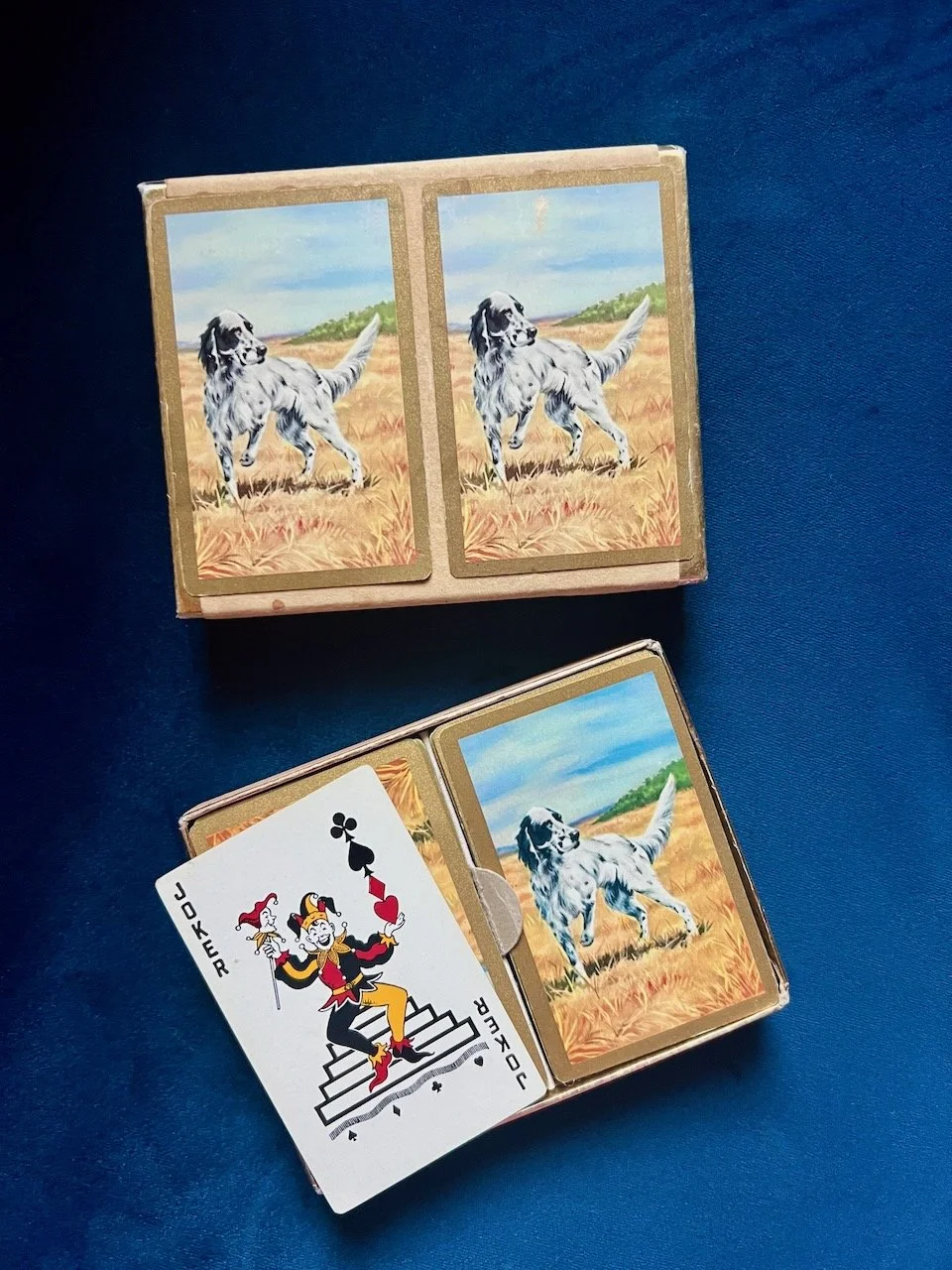
The vintage card set I salvaged from the bins.
Americans donate 5 to 6 billion pounds of clothing and household goods to thrift stores every year, but only 10-20% of that is resold to consumers. 1.5 to 2.4 billion pounds risks being sent to the landfill every year anyway. That’s 800,000 to 1 million + polar bear-sized mounds of waste. There are only 26,000 polar bears left in the wild. Maybe there are other things we can do with our unwanted items before handing the responsibility off to someone else?
Trying to reduce your footprint as an individual consumer can feel like an uphill battle that will never be won. But I promise you, the ways we decide to consume (and throw away) can 100% have an impact as a collective. Those shelves of Halloween items up in August are there because people buy them. Cheap, fast fashion has ballooned to an $178 billion dollar industry every year because people buy it. Where we spend our money and how we ditch our waste is a reflection of what we value in our world. It impacts more than I can list out here–even the polar bears.
One of the things we value here at Sunset Ridge is sustainability. There is still so much we can do as an organization, but supporting regenerative farmers who take care of their land is one way that has a compounding positive impact. Hosting thrift-pop ups and recirculating gently used clothing while also supporting our neighbors in need is another way. Providing spaces for our community to come together, support local businesses, and reduce our collective carbon footprint is a small but mighty way we hope to steward our own little corner of the world. And it brings people back in connection with one another. Join us at our next Saturday farmers market from 9 AM - 1 PM, and mark your calendars to shop for some secondhand fall finds with One Another Coffee on Saturday, September, 26th from 9 AM - 1PM. We can’t wait to see you there.
Coming Up…
Daily, NYX Yoga & Fitness
Daily, One Another Coffee
Wednesdays, 11 AM - 1:30 PM, Open Studio Painting
Wednesdays, Mission Compost Pick Up
Wednesdays-Sundays, Scott’s Pizza, Charis Park
Saturdays, 9 AM - 1 PM, Sunset Ridge Farmers Market, Charis Park
2nd & 4th Saturdays, 10 AM - 12 PM, Women’s Stitching Circle, Sunset Ridge Church Fellowship Hall
Sundays, Worship at 9 AM and 11 AM, Sunset Ridge Church
Wednesdays, September 16 - November 18, 6:30 - 7:30 PM, Joyful Noise, Students in 5th - 8th grade will discover how music deepens worship, strengthens faith, and helps build meaningful friendships. Registration required.
Friday, September 25, 7 - 9:30PM, Full Moon Friday, Charis Park
Saturday, September 26, 9 AM - 1 PM, Nuevos Vecinos Thrift Pop-Up
Event Rentals - Interested in hosting your event at Charis Park or in our facilities? Please email rentals@sunset-ridge.org
Community Partners: For updated schedules and events please follow One Another Coffee, Sunset Ridge Farmers Market, NYX Wellness, Scott’s Pizza, Mission Compost, Sprouts School, Good Acres, and Community First Food Pantry.